Featured

Everything to Understand Before Applying for Bankruptcy
Table of Contents
Death in the family. Let's say your partner dies, and they were the primary income producer in the family. You might now have less cash to cover expenditures. Divorce or separation. Divorce can be costly, and living apart from your spouse can cause a substantial drop in income. This change in income may make paying your charge card expenses more tough, a minimum of in the short term.
Medical financial obligation creates long-lasting financial distress, with medical expenses causing a large portion of U.S. insolvencies. Medical debt is a common cause of financial hardship.
The lower the ratio, the more money you need to need to cover costs. The greater the ratio, the tighter your total budget will likely be. Be sincere with your lenders about what's going on. Chances are, there's nothing you can inform them that they have not heard in the past, so do not be shy.
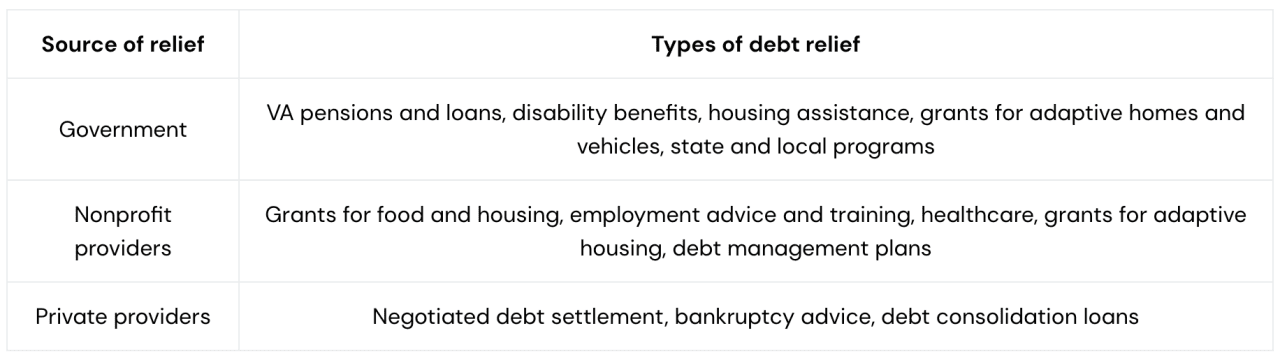
You could take different routes, each with benefits and drawbacks. Here are a few of the choices: A debt management plan, or DMP, is a debt relief option that permits you to streamline monthly credit card payments. A not-for-profit credit therapy company examines your budget plan and charge card debts. They create an individualized plan to completely pay off your unsecured debts in three to five years.
Top Public Debt Relief Solutions for 2026
You make one monthly payment to the credit therapy agency. That payment is then distributed among your creditors. Depending on the terms of your strategy, your credit card companies might accept waive costs or minimize your rates of interest. The compromise is that you generally must close your credit accounts as a condition of your registration.
A lot of credit counseling agencies charge a modest fee for their services (normally $25 to $50 per month). They can manage to offer low-priced services because they are funded by charge card issuers. The regular monthly payment in a DMP is usually really high, making it hard to stick with the program over the long term.
Improves month-to-month debt payments Prospective for cost waivers, rates of interest decreases Financial education and supportUnsecured financial obligations onlyMost individuals pay monthly feesYou'll most likely have to close your credit cardsInitial negative impact on credit scoreDoesn't decrease your debtHigh monthly payments Financial obligation consolidation includes using a brand-new loan to settle several smaller sized debts.
Going forward, you make only one payment to the financial obligation consolidation loan. Debt combination loans are usually paid back over several years. Debt consolidation makes one of the most sense if you can qualify for a lower rate of interest and you desire a set pay-off date for the financial obligations that you're combining. That way, you might simplify the payments and lower the expense of your financial obligation.
Top Federal Debt Relief Options for 2026
The huge risk with debt consolidation is that it leaves the door available to taking on more debt. Consider closing your credit card accounts after you've consolidated the financial obligation. Financial obligation debt consolidation is for somebody who can manage their debts and has a great adequate credit rating to get approved for a new loan.
It's possible to work out a financial obligation settlement on your own. Or you could ask an expert financial obligation settlement business like Liberty Debt Relief to work out on your behalf. Settling could minimize your financial obligation, but you'll require to have something to provide your creditors. To save cash for making deals, the majority of people pick to stop making debt payments.
Assisting you save up cash for deals, stopping payments plainly signals to your financial institutions that you're in financial distress. That might make them more likely to work with you, but stopping payments will have a negative effect on your credit standing. Negotiations start when you have enough saved up to make an offer.
If you work with an expert debt settlement business like Freedom Financial obligation Relief, they'll set up a dedicated account for you. Each month, you make regular deposits to the account.
If you work with an expert debt settlement company like Liberty Financial obligation Relief, we'll walk you through how to interact with your lenders during this time. Negotiations begin. As soon as you have enough cash, the financial obligation settlement business begins to negotiate with the charge card company (or companies) you owe. The financial obligation settlement business works out with creditors to settle the financial obligation for less than what is owed.
How Settled Balances Impact Your 2026 Tax ReturnChoosing Between Insolvency and Debt Settlement Options
After at least one payment has been made, the debt settlement business takes its fee from the very same account. Financial obligation settlement fees are generally between 15% and 25% of the enrolled financial obligation.
60% of customers who enter into financial obligation settlement get great results in as little as 3 months. That means that within 12 weeks, at least one of your financial obligations could be behind you.
How Settled Balances Impact Your 2026 Tax ReturnThe internal revenue service may think about that $5,000 normal earnings. Nevertheless, if you're insolvent when you settle the debt (to put it simply, if the overall of what you owe is higher than what you own), it's unlikely you'll have to pay earnings taxes on forgiven debt. Talk with a certified tax expert before you make the decision to look for debt settlement.
It might be an alternative to think about if you're experiencing monetary hardship. If you've currently fallen behind with payments and can't find out how you'll get back on top, negotiating with financial institutions is a better strategy than neglecting the issue. Trying to find Could considerably reduce your debtNo fees if you DIYGet rid of debts much faster than making minimum paymentsNo upfront settlement feesAffordable paymentPrivate Assistance from financial obligation expertsUnsecured debts onlyForgiven quantities might be taxable You'll pay charges if you work with an expert debt settlement companyNegative effect on credit standingCreditors could still pursue you for the financial obligations If your charge card financial obligation is the result of a temporary hardship such as task loss, medical issue, or other problem, speak with your card provider and ask for assistance.
Choosing Between Bankruptcy and Debt Settlement Programs
You anticipate your insurance provider to repay some of your costs, however you must develop the money to cover immediate costs. You don't understand the length of time it will be before you're back on level monetary footing. While creditors aren't bound to use difficulty services, it's in their best interest to help you survive a rough spot and keep you as a customer.
Here are some of the hardship determines you may be able to access: Charge waiversInterest rate reductionsMinimum payment reductionsTemporary payment suspensionsCall, e-mail, or message your charge card business to ask what help is offered. Be prepared to discuss your situation, consisting of the quantity you can pay. Ask what documents you need to offer, and whether there are any other program requirements.

Latest Posts
)
Nonprofit Credit Counseling Services in 2026
Required Financial Education Classes for 2026

Finding Expert Financial Help in the Transition 2026